NC Advisory Council Explores Toxicology Options for Marijuana DWI Cases
With no blood-level threshold for THC like the one used for alcohol, state officials are weighing expanded lab testing as legalization debates continue.
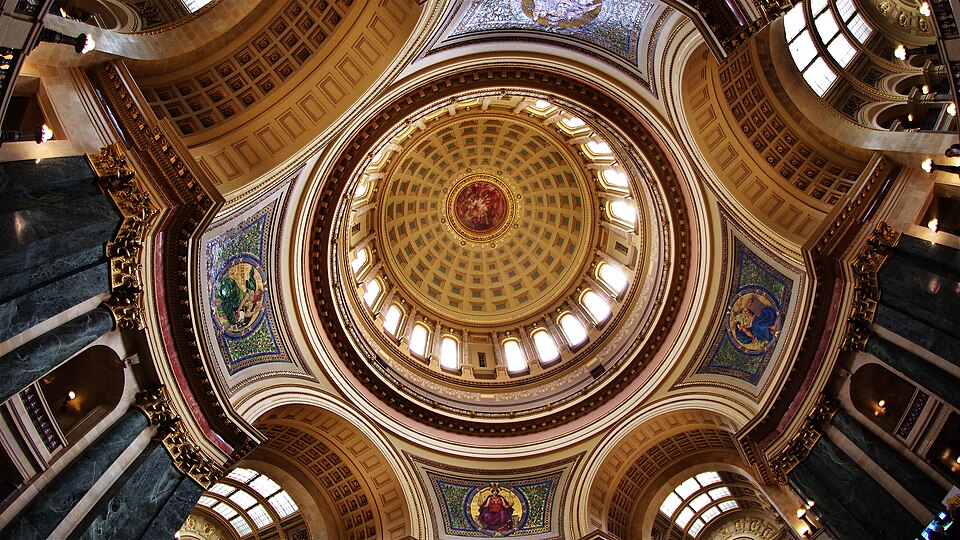 FILE — statehouse · B.D. Gilfry / CC BY-SA 2.0
North Carolina officials are studying whether expanded toxicology testing could give police a better tool for identifying marijuana-impaired drivers, as the state's cannabis advisory council considers a possible statewide testing model, according to WRAL.
No Equivalent to a Breathalyzer
Unlike alcohol, there is no agreed-upon blood-level benchmark that establishes marijuana intoxication for legal purposes, WRAL reported. Toxicologists told the North Carolina Advisory Council on Cannabis that blood testing can detect THC, the psychoactive compound in cannabis, but the compound can remain in a person's system for weeks after any impairing effects have worn off, making it an imperfect stand-in for a legal threshold.
Toxicologists Pitch Their Role
Donna Papsun, a toxicologist with NMS Labs, told the council that "toxicology is not the magic bullet, but the toxicology is the scientific evidence of exposure," according to WRAL. Papsun said blood samples give the best read on recent use but should be weighed alongside driving behavior, officer observations, field sobriety tests and evaluations from certified Drug Recognition Experts. NMS Labs, which WRAL reported already works with more than 100 North Carolina law enforcement agencies, told the council its current turnaround time is about 14 days and that it has room to take on more samples, though it would need additional staff to support statewide reporting, interpretation and court testimony under an expanded program.
A Shortage of Trained Officers
WRAL reported that North Carolina had roughly 175 certified Drug Recognition Experts as of June, spread across a police force of about 34,000 officers statewide — a gap that Roxboro Police Chief David Hess described to WRAL in June by saying, "There's not enough, and we're not currently ready to take this on." The shortfall is described as especially acute for small and rural departments, which have fewer resources to train or retain specialists.
Legalization Debate in the Background
The testing discussion comes as North Carolina lawmakers and Gov. Josh Stein continue to examine broader marijuana legalization, WRAL reported. The outlet noted, as general national context, that most other states have legalized cannabis for medical use and roughly half have legalized recreational use, though WRAL did not tie that trend directly to North Carolina's own testing deliberations. Our database shows related coverage from WCNC in February on state lawmakers weighing legalization amid a revenue debate, indicating the DWI-testing question is one piece of a wider policy conversation still unresolved in Raleigh.
Cross-Border Pressure Cited in Opinion Piece
A Carolina Journal opinion column argues that Virginia, which the column says anticipates launching a statewide retail cannabis market around November 2026, will pull North Carolina consumers across the 300-mile shared border, straining enforcement and forfeiting potential tax revenue — though this is the author's stated view and an anticipated timeline rather than a confirmed launch date. The same column references an executive order the author says President Trump issued directing the completion of marijuana's federal rescheduling process, which the piece contends signals a shift in federal policy away from strict prohibition; that characterization comes solely from the opinion piece and has not been independently verified against other reporting provided here. The author, describing a background in narcotics and smuggling investigations, also points to what the column calls regulatory incoherence around hemp-derived THC products sold at gas stations and convenience stores, an issue also flagged in North Carolina House Bill 328.
Enforcement Continues Under Current Law
Marijuana remains illegal in North Carolina, and our database shows enforcement activity continuing in parallel with the policy debate: recent coverage includes a Greensboro trafficking case involving 104 pounds of marijuana (WFMY), a Fox8 WGHP report on a convenience store accused of selling marijuana, and an NC Department of Public Safety operation targeting Winston-Salem businesses for controlled-substance sales to minors. Separately, Marijuana Moment reported in August on a White House push to delay a federal hemp THC product ban, a development that could bear on the intoxicating-hemp market the Carolina Journal column criticized.
What to Watch
It remains unclear whether the toxicology discussion presented to the cannabis advisory council will translate into a formal pilot program, a statewide testing standard, or new legislation, and WRAL's reporting does not indicate a timeline for any of those outcomes. The gap between the roughly 175 certified Drug Recognition Experts and North Carolina's broader police force suggests that any expanded testing regime would likely need to address training capacity alongside laboratory capacity. Whether the state moves toward legalization at all — and whether Virginia's anticipated retail market materializes on the timeline the Carolina Journal column describes — remains an open question that will shape how urgently lawmakers act on impaired-driving standards.
Original report: WRAL ↗